
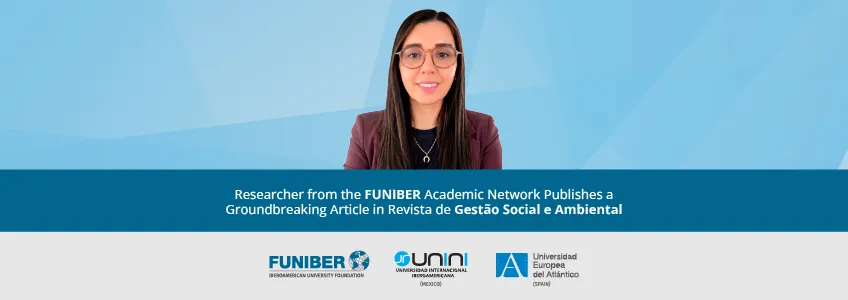
Erica Yovaira Cernas Arce, a student in the International Master’s Program in Nutrition and Dietetics, with a dual degree from the Universidad Europea del Atlántico (European University of the Atlantic, UNEATLANTICO), and the Universidad Internacional Iberoamericana de México (International Ibero-American University of Mexico, UNINI Mexico)—both of which are part of the International Academic Network of the Ibero-American University Foundation (FUNIBER)—participated alongside other researchers in a study published in the journal De Gestão Social e Ambiental (RGSA), which analyzes the potential of various alternative ingredients for the production of gluten-free instant pasta.
The study, titled “Gluten-Free Pasta, an Alternative to the Consumption of Instant Pasta: a Review,” analyzes various formulations that allow for the substitution of wheat and improve the nutritional properties of these products.
Alternative Ingredients for Making Gluten-Free Pasta
Pasta is a widely consumed food due to its low cost, versatility, and ease of preparation. However, traditional formulations made with wheat contain gluten, a protein that people with celiac disease—a chronic autoimmune condition that damages the lining of the small intestine—must exclude from their diet. This need has driven the search for ingredients that allow for the development of alternative products with characteristics suitable for consumption.
The study reviews the use of various raw materials, including rice, lentil, corn, bean, and amaranth flours, as well as ingredients derived from cassava, sweet potato, and soy. It also includes research on the incorporation of other nutrient sources, such as insect flours and macambo, a fruit native to the Amazon.
These alternatives offer various possibilities for modifying the characteristics of pasta, such as its protein and fiber content, texture, and behavior during cooking. However, the production of gluten-free products makes it difficult to obtain a dough with properties similar to those of traditional pasta; therefore, some formulations incorporate starches and hydrocolloids to improve their consistency and firmness.
Results and Opportunities for Food Research
The review identifies rice flour as one of the most commonly used raw materials for making gluten-free pasta, although its inclusion may require complementary ingredients to improve elasticity and texture. Among the results, a formulation made with lentil flour stands out, which partially replaced wheat flour by 50%. According to the study analyzed, this pasta had a higher protein and fiber content, as well as a high level of acceptance among the surveyed consumers.
Another formulation made with starch and cassava bagasse, combined with amaranth flour, achieved a fiber content of 9.37% and a protein content of 10.41%, along with adequate firmness and low stickiness. These results demonstrate the potential of various raw materials to develop products with specific nutritional and technological properties.
The review also explores less conventional ingredients, such as macambo, soy, and insect flours, which allow for diversification of nutritional content, although they pose challenges related to texture and consumer acceptance.
Furthermore, the review examines the limitations of some conventional instant noodles, such as their high sodium content, and highlights the need for further research to improve the nutritional composition and sensory characteristics of gluten-free alternatives. The study concludes that the development of these products represents an opportunity to diversify the ingredients used and expand dietary options.
Erica Yovaira Cernas Arce’s participation in this scientific publication constitutes a valuable contribution to research in the field of nutrition and food technology. FUNIBER recognizes and highlights this academic achievement and encourages the student to continue developing her interest in research, deepening her education, and contributing to the generation of knowledge that will advance this field.
Likewise, the Foundation reaffirms its commitment to promoting research, innovation, and high-impact scientific output by encouraging the active participation of students, faculty, and researchers in publications that strengthen the generation of knowledge contributing to the advancement of various scientific fields.
To learn more about this topic, you can access the study via the following link: Gluten-Free Pasta, an Alternative to Instant Pasta: a Review.