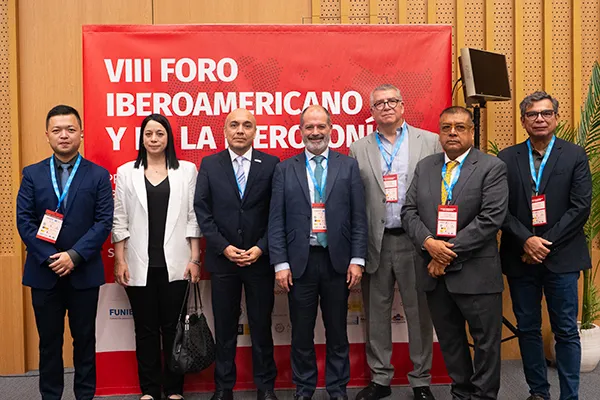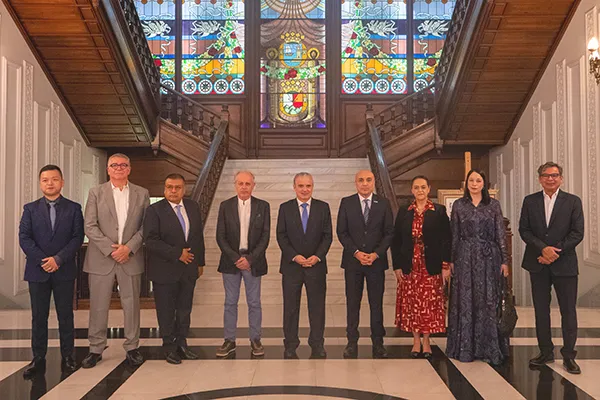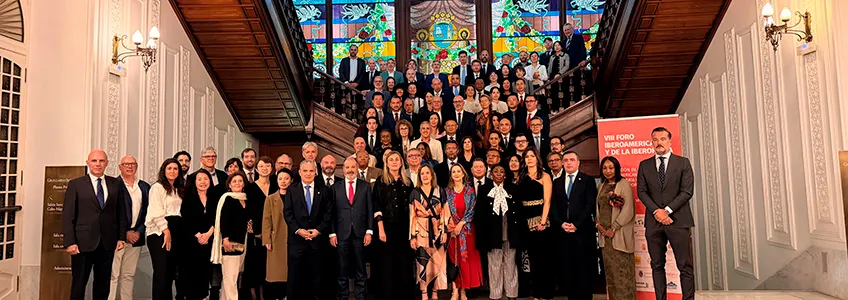
On October 15th and 16th, the Universidad Europea del Atlántico (European University of the Atlantic, UNEATLANTICO) hosted the 8th Ibero-American and Iberophony Forum in Santander, focusing on the “ Future of the Ibero-American Community and University Cooperation With the People’s Republic of China.” The event took place in the context of preparations for the upcoming Ibero-American Summit of Heads of State and Government, scheduled for November 4th and 5th in Madrid, and built upon the work initiated during the 7th Forum, held in Beijing in November 2025.
The Forum brought together representatives from the regional government of the Spanish Autonomous Community of Cantabria, the municipality of Santander, and academics from national and international universities, including the rector of the host university, the Universidad Europea del Atlántico (UNEATLANTICO), Dr. Rubén Calderón Iglesias; Dr. Luis Dzul López, rector of the Universidad Internacional Iberoamericana de México (International Iberoamerican University of Mexico, UNINI México); and Prof. Johnny Alexander Tamayo Arias, vice rector of the Universidad Nacional de Colombia (UNAL), as well as members of the Ibero-American, African, and other diplomatic corps linked to Ibero-America. Experts from both China and Iberophone countries also participated with the aim of reflecting on the potential of the Pan-Iberian or Iberophone Space as a forum for international cooperation, as well as on common challenges and opportunities to strengthen ties between these two spheres of culture and civilization.
The event saw broad remote participation, with more than 3,000 attendees following virtually and the participation of 17 Chinese universities, which expanded the international reach of the sessions.
The event was organized by the Iberoamerican University Foundation (FUNIBER), the China Chair Foundation, and UNEATLANTICO. Also collaborating were Shandong University of Political Science and Youth (SDYU), the Academy of Diplomacy, the Gustavo Bueno Foundation (FGB), the Ibero-American Communication Association (ASICOM), and the Royal European Academy of Doctors (RAED). The event received institutional support and sponsorship from the Government of Spain, the Government of Cantabria, and the Santander City Council.
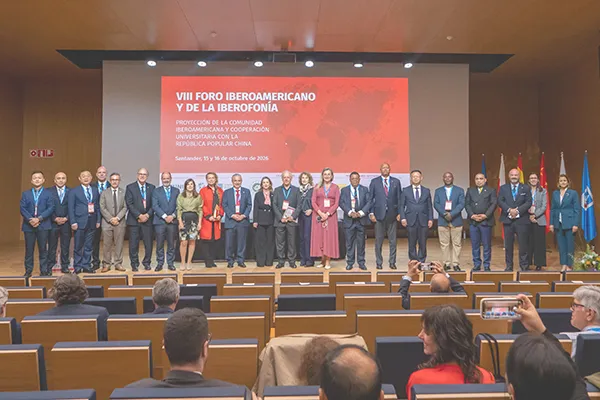
Opening Ceremony
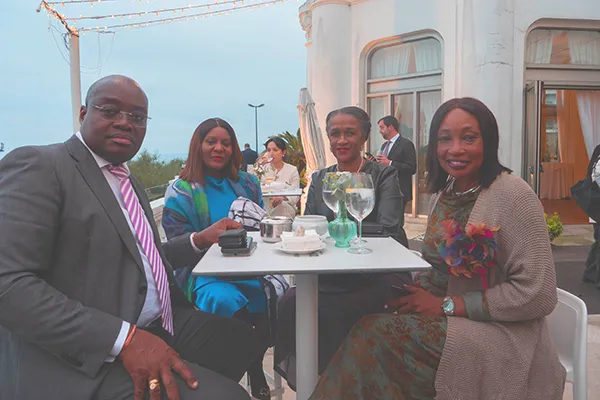
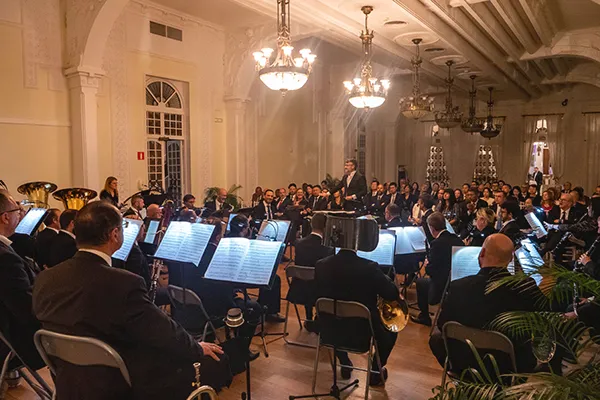
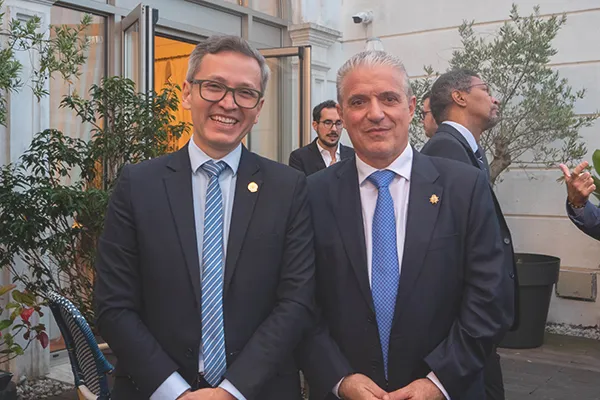
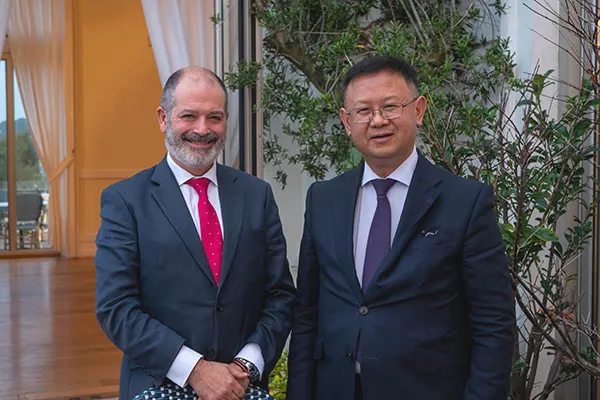
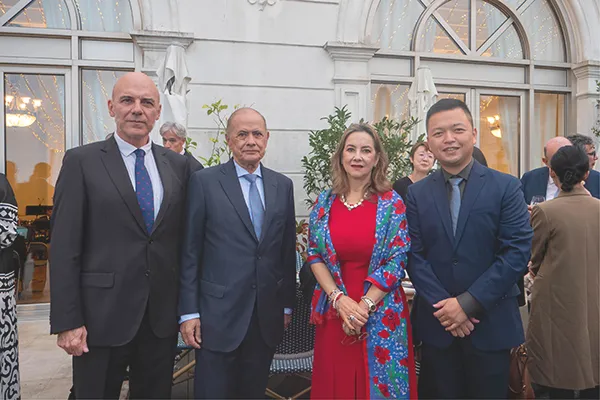
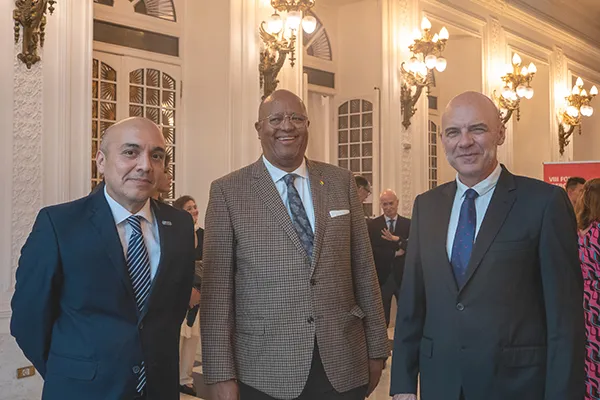
The official presentation of the event, held the previous day in the capital of Cantabria, brought together officials, organizers, collaborators, speakers, and guests. The presentation session included various ceremonial elements and remarks by institutional representatives and diplomats associated with the event.
Representatives from the Government of Cantabria and the Santander City Council participated, along with the Secretary General of the Ibero-American Social Security Organization (OISS), Gina Magnolia Riaño Barón; the Minister at the Embassy of the People’s Republic of China in Spain, Qu Xun; and the Rector of UNEATLANTICO, Rubén Calderón Iglesias. This reception provided an initial opportunity for participants to meet and served as an institutional framework for the academic sessions held during the forum.
 From left to right: Marta Montoro, president of the China Chair; Gema Igual Ortiz, mayor of Santander; Qu Xun, minister at the Embassy of the People’s Republic of China in Spain; along with other guests.
A Forum Focused on International Dialogue
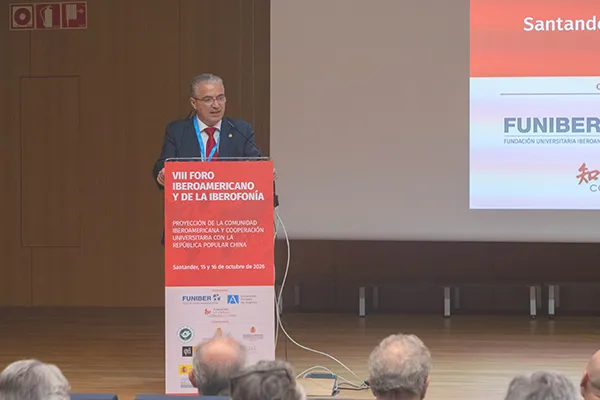
The opening session on October 16th began with welcoming remarks by FUNIBER President Dr. Santos Gracia Villar, who emphasized the need to promote strategic cooperation between China and all Spanish- and Portuguese-speaking countries in the current geopolitical context. In this regard, he noted that the convergence between China and the Iberian World brings together nearly 2.5 billion people and constitutes a far-reaching human, cultural, and economic space—comprising nearly one-third of the world’s population—whose influence benefits not only Iberophone countries but the international community as a whole. He also highlighted the importance of university cooperation and cited as an example of its results the recent creation of a joint campus in China between the Universidad Europea del Atlántico and Shandong University. Finally, he emphasized the role of education and language learning in strengthening ties between China and the Iberian World and in building a more pluralistic and balanced international order.
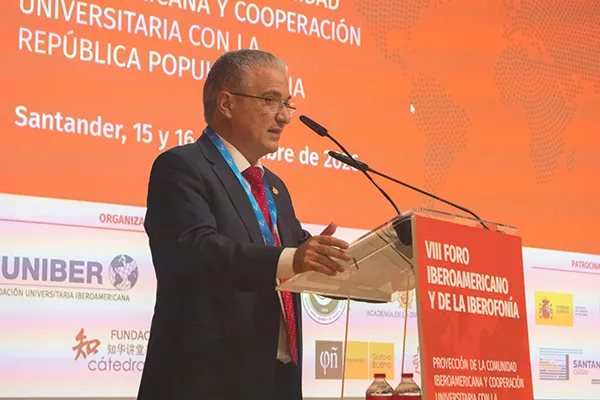 Dr. Santos Gracia, president of FUNIBER, during his remarks at the opening session.
Next to speak was Isabel Gómez Barreda García, Councilwoman for Employment, Entrepreneurship, and Business Development for the City of Santander. Sergio Silva, Regional Minister of Education, Vocational Training, and Universities for the Government of Cantabria, also participated and joined in the institutional opening of the event.
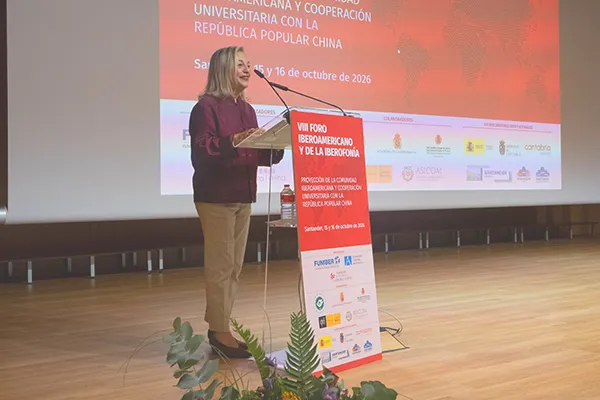 Isabel Gómez Barreda García, Councilor for Employment, Entrepreneurship, and Business Development for the City of Santander, during her remarks at the opening session.
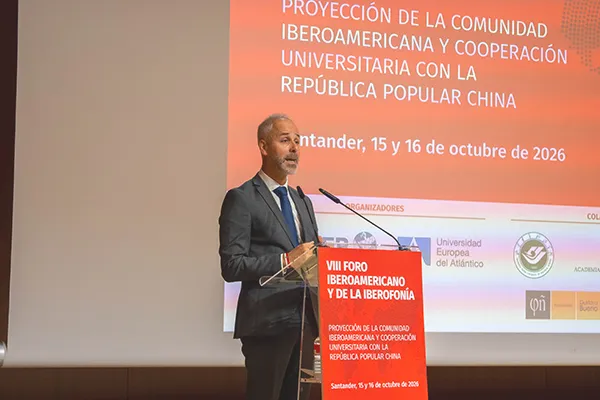
Full remarks by Dr. Santos Gracia Villar, Isabel Gómez Barreda García, and Sergio Silva.
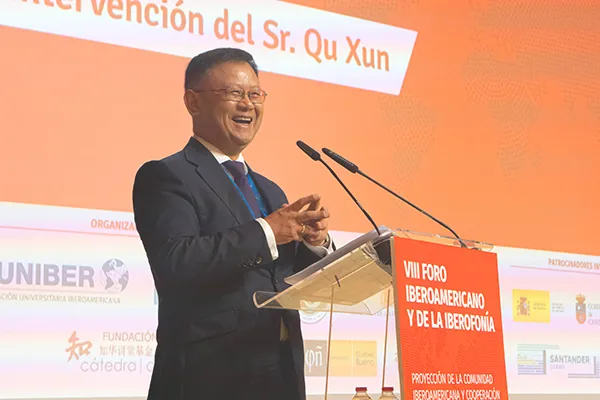
On behalf of the official Chinese delegation, Qu Xun, Minister at the Embassy of the People’s Republic of China in Spain, highlighted the importance of strengthening relations between China, Europe, and Latin America through mutual respect, intercultural dialogue, and cooperation in areas such as education, science, innovation, and economic development. In this context, he emphasized the potential of the relationship between China and Ibero-America—a region that is home to nearly 2.5 billion people, approximately one-third of the world’s population, and which possesses significant demographic, cultural, and economic weight. He also advocated for exchanges among peoples as a means of jointly addressing international challenges. It is worth noting the convergence of views between the Chinese official representative and the president of the Iberoamerican University Foundation, Dr. Santos Gracia Villar.
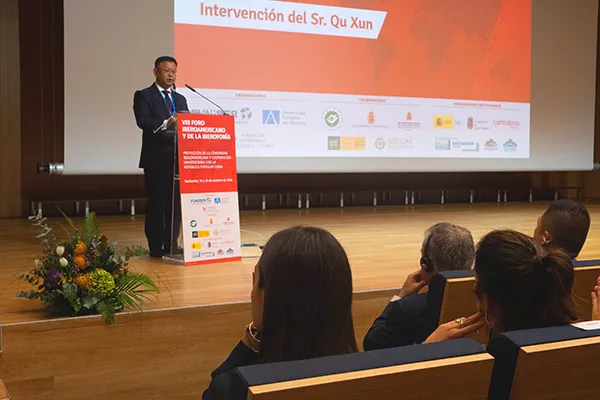 The Minister at the Embassy of the People’s Republic of China in Spain, Qu Xun.
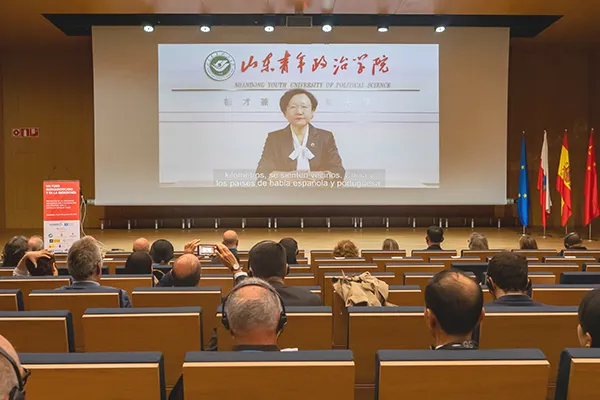
For her part, Wei Yanju, secretary of the Communist Party of China Committee at Shandong University of Political Science and Youth, focused on strengthening educational cooperation between China and the Ibero-American community. Her remarks highlighted three key elements for advancing this relationship: languages as bridges of understanding, digitalization as a tool for collaboration, and young people as key players in future academic and cultural relations.
Iberphony as a Platform for International Projection and Cooperation with China
The program continued with a presentation by Dr. Frigdiano Álvaro Durántez Prados, Director of Institutional Relations at the Iberomerican University Foundation and of the FUNIBER Chair of Iberoamerican and Iberophonic Studies.
Durántez Prados addressed the importance of strengthening an educational and strategic alliance between China and the Ibero-American Community and the Iberian World in general, leveraging the international reach of the Pan-Iberian or Iberophone Space—a multinational sphere comprising Spanish- and Portuguese-speaking countries across all continents, bringing together 900 million people worldwide. This linguistic space fosters cultural exchange, economic cooperation, and a greater international presence. In this context, he emphasized the need for China to strengthen its ties with the Ibero-American Community and incorporate the Spanish language as a strategic tool in its foreign and cultural policy, with the aim of expanding its international influence, promoting economic and cultural cooperation, and reinforcing its presence on the global stage.
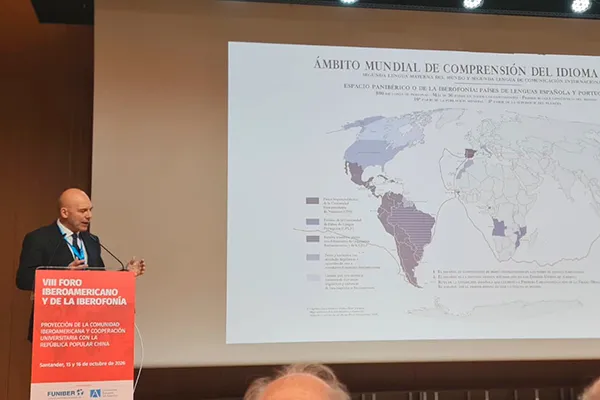
Full remarks by Dr. F. Álvaro Durántez.
Next, Marta Montoro, president of the China Chair Foundation, argued that cultural and linguistic diversity should not be viewed as an obstacle to cooperation, but rather as a factor that can enrich dialogue among civilizations. In this context, she highlighted the role of the Chinese, Spanish, and Portuguese languages as bridges connecting Asia, Europe, Ibero-America, and Africa, as well as the potential of the Chinese region of Macau to promote academic, scientific, cultural, and economic collaboration initiatives between China and the Iberophone world.
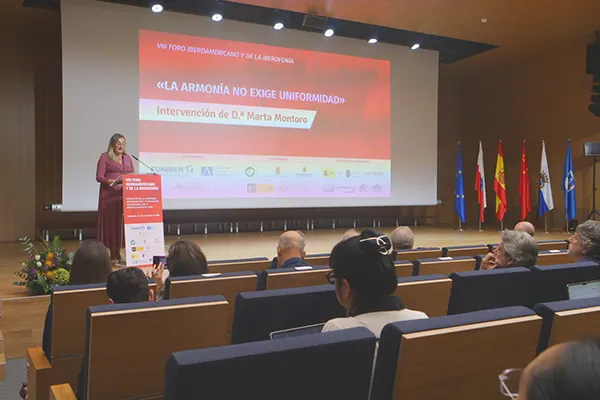
Full remarks by. Marta Montoro.
Chinese Universities and New Pathways for Academic Cooperation
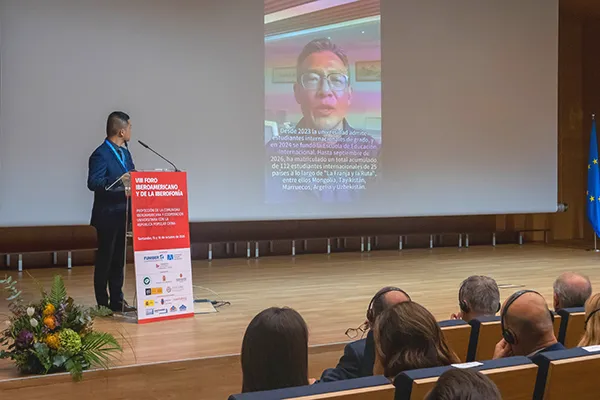
The session dedicated to university cooperation was presented by Dong Chen, director of FUNIBER in China, who highlighted the Foundation’s collaboration with some thirty universities across twelve Chinese provinces, as well as the progress made in research and training initiatives. Among these, he noted the creation of a joint international laboratory in food science and nutrition and the development of integrated undergraduate and master’s degree programs. He also highlighted the Atlantic Institute of Digital Culture—a joint campus resulting from the partnership between UNEATLANTICO and Shandong University—as an initiative aimed at deepening academic relations between Spain and China.
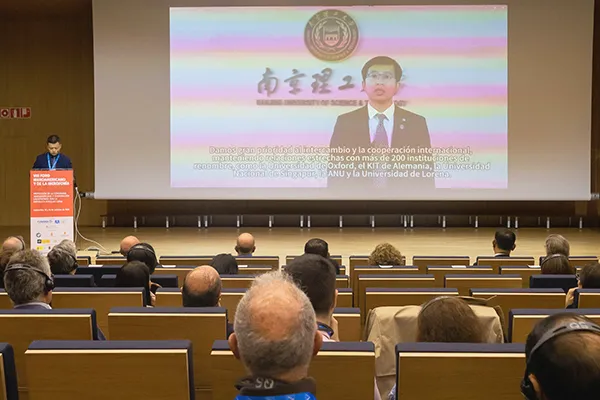
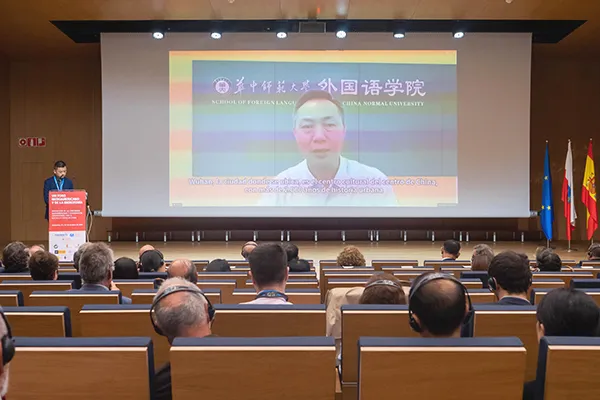
He also introduced virtual presentations by various Chinese academic institutions, featuring representatives from Nanjing University of Science and Technology, the School of Foreign Languages at Central China Normal University, Wenzhou University, and the Ningbo Institute of Technology at Zhejiang University.
The participating universities presented their perspectives and areas of focus, which aim to expand academic exchange between Chinese institutions and the Iberophone Space. At the same time, they highlighted opportunities for collaboration in areas such as language teaching, joint training programs, research, and innovation.
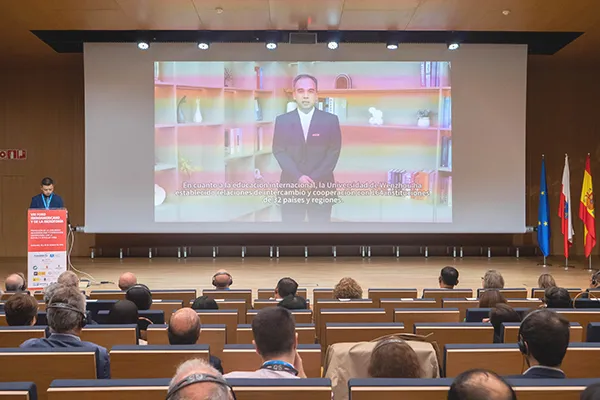
Virtual participation by the dean of the School of Economics and Management at the University of Wenzhou.
Social Cooperation, Intercultural Communication, and Strategic Alliances
The Secretary General of the Ibero-American Social Security Organization (OISS), Gina Magnolia Riaño Barón, addressed the role of Ibero-American cooperation in promoting economic and social well-being. In this context, she highlighted the Multilateral Ibero-American Social Security Agreement, signed by 16 countries, as an instrument for protecting the rights of migrants and their families. The Ibero-American representative also highlighted the need to address challenges such as inequality, the informal economy, and low productivity through education, innovation, and greater international cooperation.
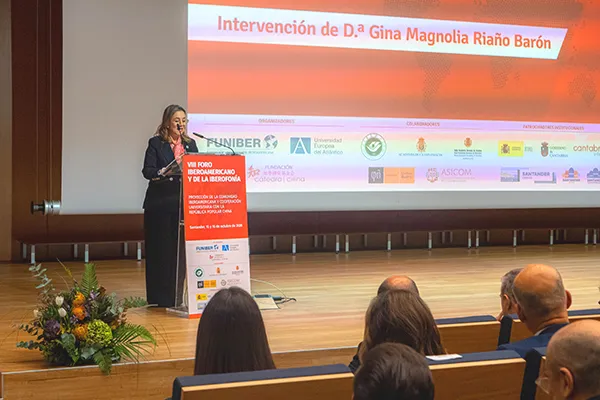
Full remarks by Gina Magnolia Riaño.
From Beijing, Prof. Dr. Chang Fuliang, secretary of the Party Committee of the School of Spanish and Portuguese Languages at Beijing Foreign Studies University, highlighted the role of stereotypes and misunderstandings as obstacles to mutual trust between China and Hispanic countries. In this regard, he advocated for the need to construct more balanced narratives about China and Spanish-speaking countries, to foster direct contact, and to train professionals capable of promoting more rigorous and context-sensitive intercultural communication.
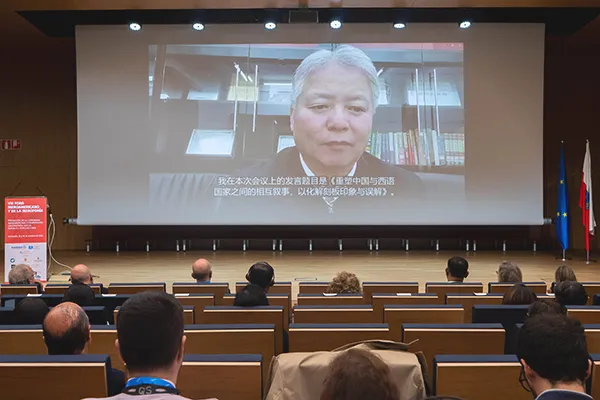
Virtual presentation by Dr. Chang Fuliang.
Next, Dr. Alfredo Rocafort Nicolau, president of the Royal European Academy of Doctors, raised the need to transform the historical ties between Ibero-America and Europe into a future-oriented alliance capable of translating their scientific, economic, cultural, and human capabilities into concrete projects. Among the priority areas for collaboration, he highlighted the energy transition, technological innovation, research, and academic mobility, along with the strengthening of multilateralism and the international flow of talent.
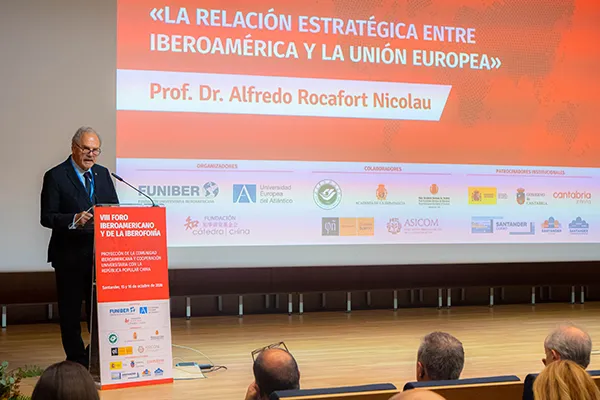
Full remarks by Dr. Alfredo Rocafort.
The connection with Macau made it possible to incorporate the perspective of Prof. Dr. José Luis de Sales Marques, former president of the Macau Institute of European Studies and the Macau Municipal Council. His remarks highlighted the role of this Chinese city with a Portuguese heritage as a platform for bringing China closer to Portuguese- and Spanish-speaking countries, drawing on its historical ties with Portugal and its integration into the Guangdong-Hong Kong-Macao Greater Bay Area. He also pointed out opportunities for collaboration in scientific research, technology, trade, finance, cultural industries, and education, with a special focus on the internationalization of businesses and the strengthening of institutional exchanges.
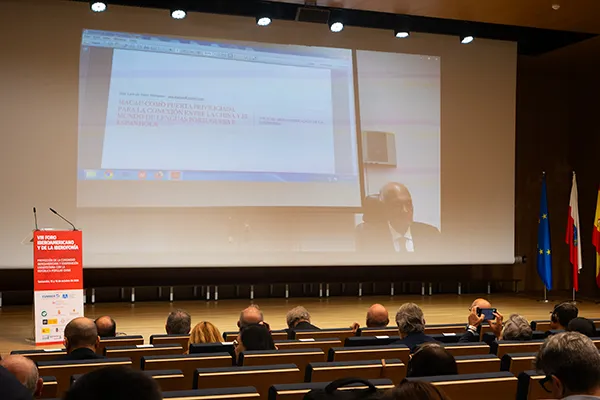
Full remarks by Prof. Dr. José Luis Sales Marques.
For his part, the rector of UNEATLANTICO, Prof. Dr. Rubén Calderón Iglesias, examined opportunities for collaboration in sectors such as energy, infrastructure, digital transformation, and supply chain security. He also highlighted the importance of overcoming fragmentation among Iberophone countries and promoting triangular cooperation projects that connect China, Europe, Africa, and Ibero-America through sustainable financing mechanisms and knowledge transfer that contribute to economic development and the resilience of societies.
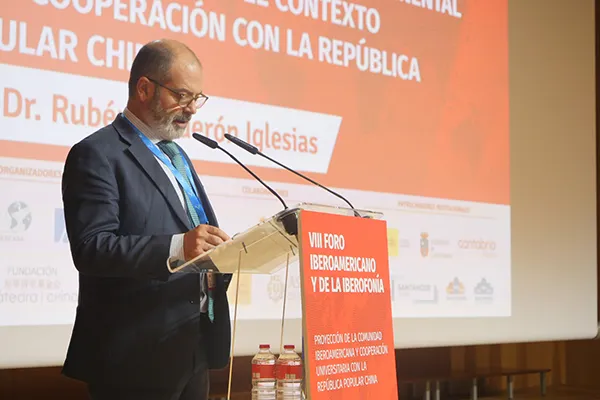
Full remarks by Rector Rubén Calderón.
History, Identity, and the Global Dimension of Iberophony
The historical and philosophical perspective on relations between China and the Hispanic World was highlighted in the presentation by Prof. Dr. Gustavo Bueno, president of the Gustavo Bueno Foundation, who discussed the historical exchanges between the two civilizations and emphasized the role of the Manila Galleon in connecting Asia, the Americas, and Europe during the first wave of globalization. He also discussed the subsequent transformations in these relations and advocated for the importance of promoting contemporary cooperation based on the recognition of cultural identities and mutual benefit.
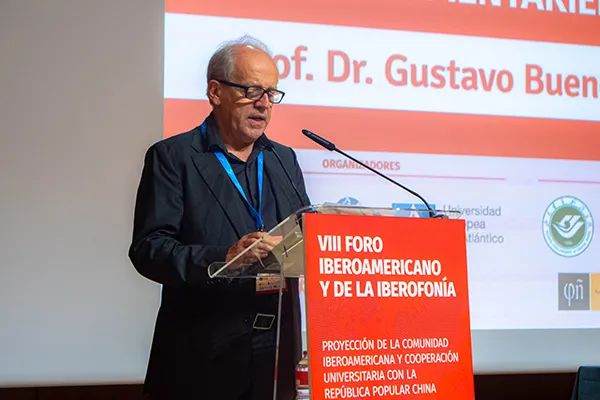
Full remarks by the president of the Gustavo Bueno Foundation.
The African dimension of the Iberophone Space was addressed by Prof. Dr. Fernando Ignacio Ondo, a member of the Equatorial Guinean Academy of the Spanish Language and president of the International Center for Graduate Studies of Equatorial Guinea. His presentation highlighted Equatorial Guinea’s Afro-Hispanic and Bantu identity and its role as a bridge between Africa, Europe, and the Americas. He also highlighted the Equatorial Guinean Chair of Ibero-African Studies—established with FUNIBER’s support—as an initiative to promote knowledge generation from Africa and strengthen academic, scientific, and literary exchanges.
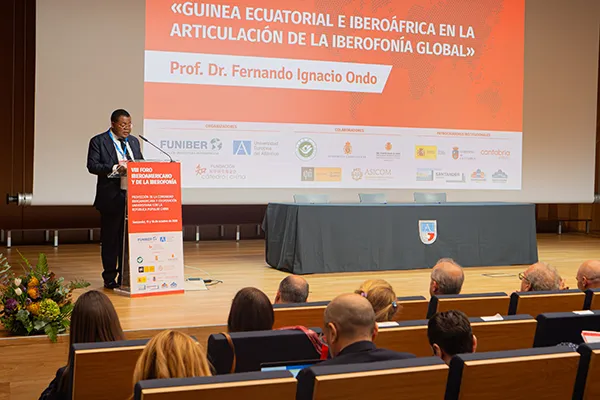
Full remarks by Dr. Fernando Ondo.
Next, Sol de la Quadra-Salcedo Asumendi, director of the Miguel de la Quadra-Salcedo Ibero-American Institute, highlighted the ability of networks of young people and professionals to transform linguistic and cultural ties into cooperation initiatives. As an example, she presented the Atlas Vivo de Expedicionarios, a digital platform designed to connect professionals, universities, institutions, and companies to promote projects in education, sustainability, mentoring, and community development.
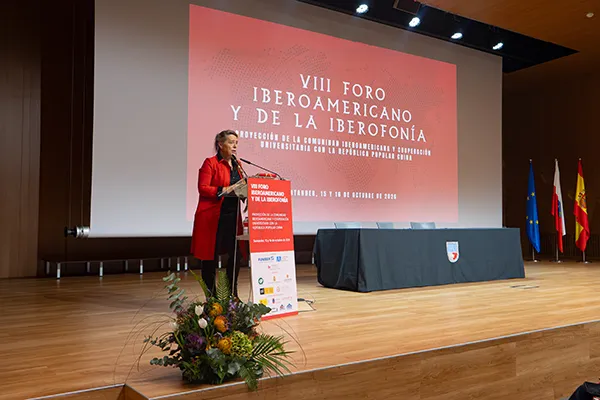
Full remarks by Sol Quadra-Salcedo.
The academic session concluded with remarks by Prof. Gloria Lago, coordinator of Alianza por el Español, who reflected on the need to preserve Spanish’s capacity to produce and disseminate scientific and technological knowledge, ensuring that the dominance of English does not limit the circulation of research relevant to other linguistic communities. She also highlighted the possibilities offered by artificial intelligence and machine translation to strengthen scientific exchange among the Spanish-speaking, Portuguese-speaking, and Chinese-speaking communities, and proposed launching a university-based initiative for scientific translation in Chinese, Spanish, and Portuguese.
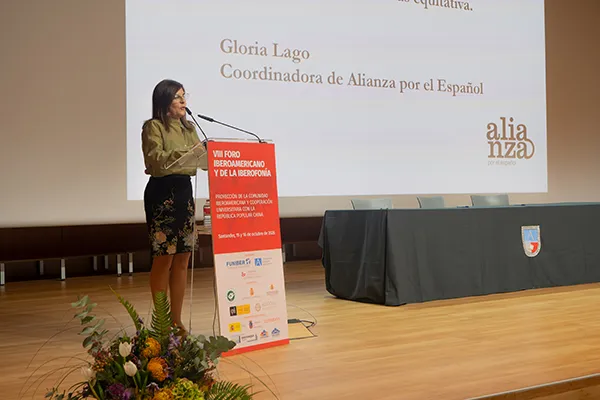
Full remarks by Gloria Lago.
Overall, the presentations highlighted the breadth of areas in which cooperation between China and the Spanish- and Portuguese-speaking worlds can develop. From education and research to intercultural communication, social protection, the economy, and the Ibero-African dimension, the speakers agreed on the importance of strengthening collaboration mechanisms and transforming linguistic and historical ties into initiatives with international reach.
The Santander Agreement Strengthens Institutional Ties
As a key outcome of the meeting, FUNIBER, the China Chair Foundation, and UNEATLANTICO signed the Santander Agreement, a general collaboration agreement designed as a concrete step toward strengthening academic and cultural relations between China and Iberophone countries. Among the main initiatives outlined in this agreement is the creation of an Iberophony Section within the China Chair Foundation, which will be supported by the FUNIBER Chair.
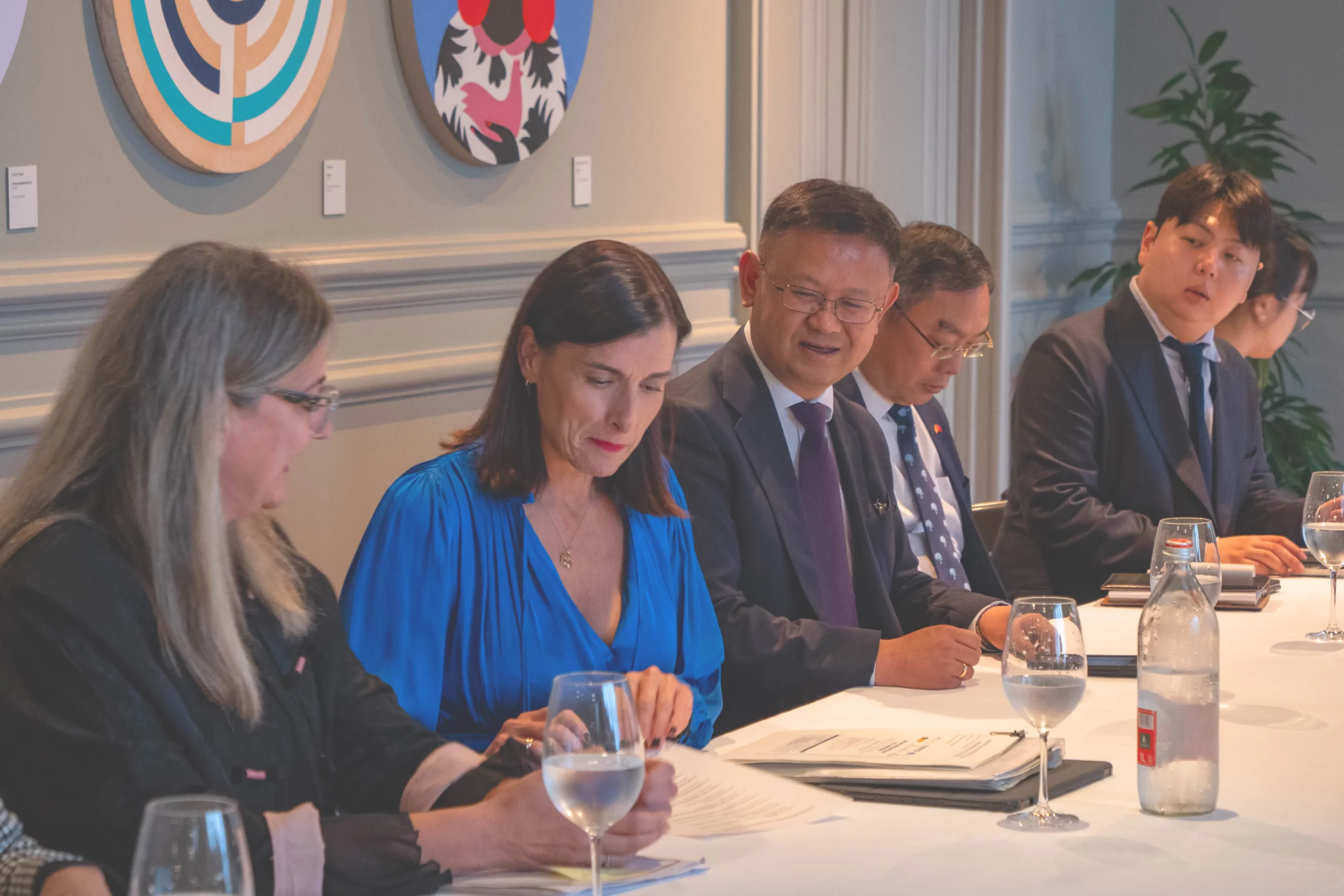
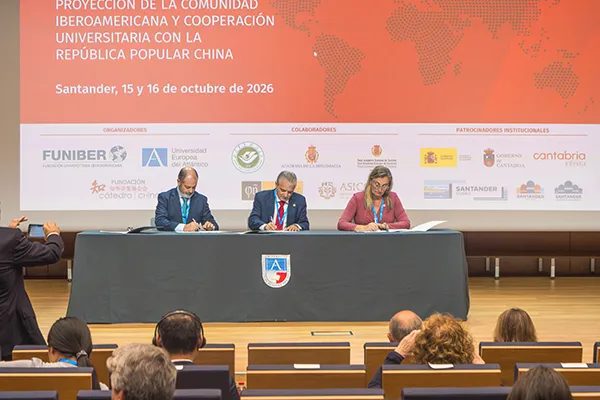 Dr. Ruben Calderon, rector of UNEATLANTICO; Dr. Santos Gracia, president of FUNIBER; and Marta Montoro, president of the China Chair, during the signing of the Santander Agreement.
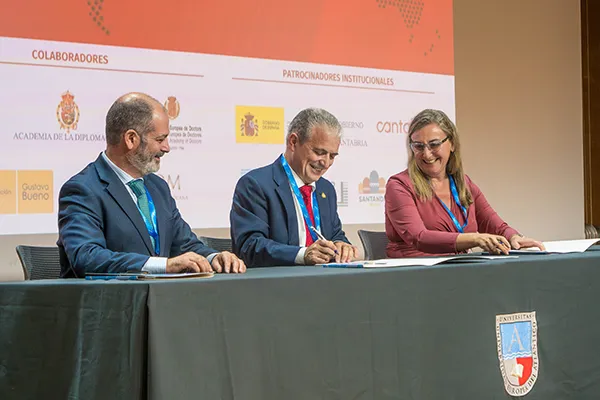
The holding of the 8th Ibero-American and Iberophony Forum and the signing of the Santander Agreement strengthen dialogue between China and Spanish- and Portuguese-speaking societies and help consolidate the Iberophone Space as a sphere of academic, scientific, and cultural cooperation. Within this framework, FUNIBER reaffirms its commitment to higher education and the strengthening of international ties through its University Network and the FUNIBER Chair of Iberoamerican and Iberophonic Studies, promoting the exchange of knowledge and understanding among peoples.