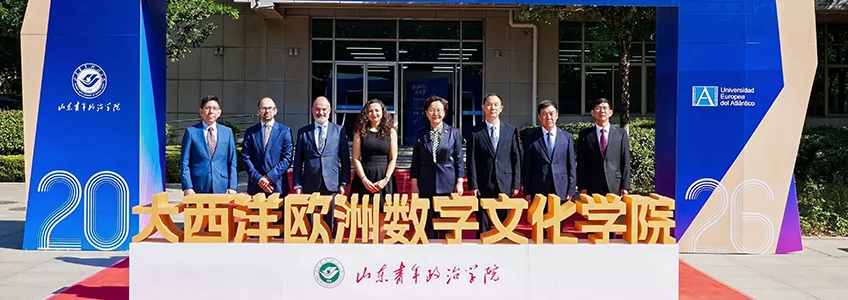
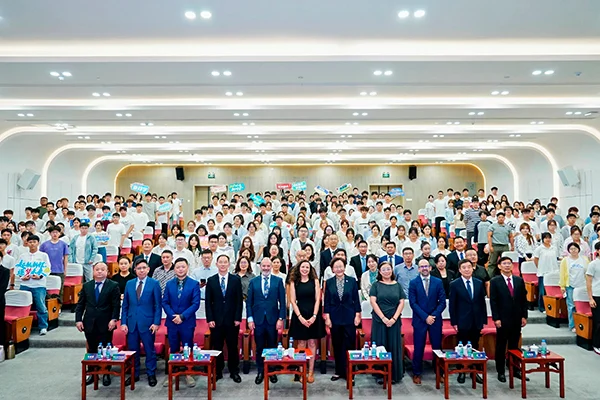
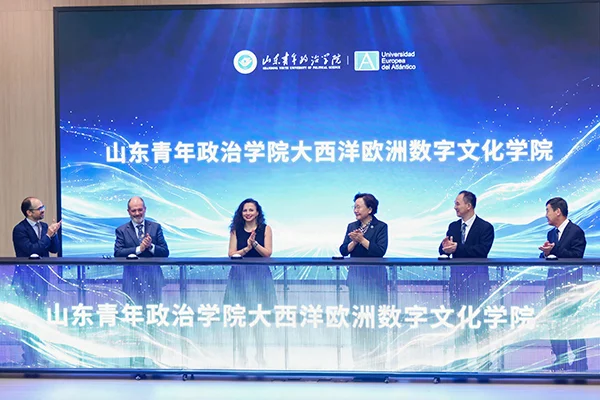
The Universidad Europea del Atlántico (European University of the Atlantic, UNEATLANTICO), an institution that is part of the International Academic Network of the Iberoamerican University Foundation (FUNIBER), inaugurated the Atlantic Institute of Digital Culture at Shandong University of Political Science and Youth (SDYU) in Jinan, China, thereby strengthening academic and cultural cooperation between the two institutions.
The launch of this joint campus represents a new step in the university’s internationalization and in the creation of opportunities for collaboration between Spain and China. It also represents a significant milestone for Spanish higher education, as it positions UNEATLANTICO as the first private Spanish university and the fifth university in the country to launch a university initiative of this kind in China.
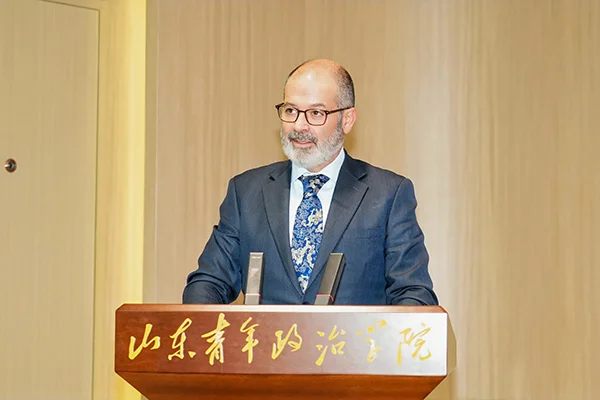
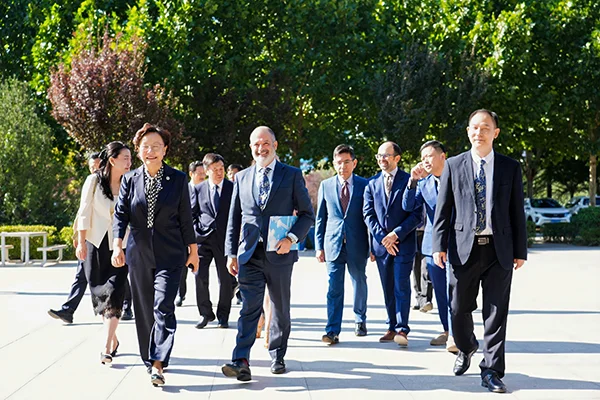
The opening ceremony was attended by the university’s rector, Rubén Calderón; the secretary general, Jesús Peña; the dean of the Higher Polytechnic School, Manuel Masías; the counselor for education at the Spanish Embassy in China, María Luisa Ochoa; and representatives from Shandong University of Political Science and Youth.
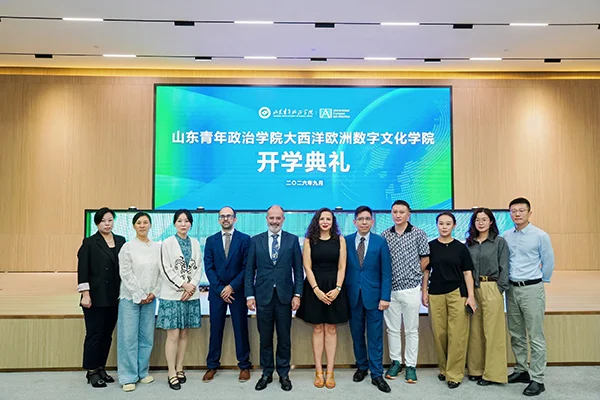
The presence of the representative from the Spanish Embassy underscored the institutional significance of an initiative aimed at strengthening academic and cultural exchange between the two countries.
A Project That Unites Training, Knowledge, And Cooperation
During the ceremony, UNEATLANTICO awarded its University Medal to Professor Wei Yanju, secretary of the Chinese Communist Party Committee at SDYU, in recognition of her contribution to the development of collaboration between the two institutions.
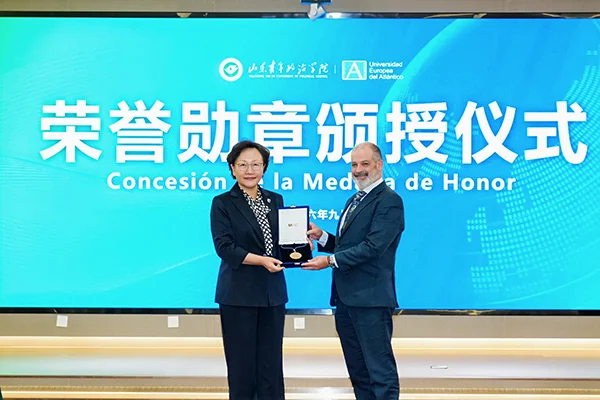
In his remarks, Rubén Calderón highlighted the role played by Wei Yanju in building this relationship and in turning the desire for cooperation into concrete projects. The university president emphasized that behind the academic agreements, student exchange programs, dual degree programs, and the joint campus lies one essential element: trust between people and institutions.
The Atlantic Institute of Digital Culture is launching its programs with two joint degree programs, each offering 120 spots for new students. All 240 spots offered for its first year have been filled, and once the campus is fully operational, it is expected to have nearly 1,000 students.
The initiative also calls for gradually expanding collaboration into new areas of knowledge. Among the planned areas of focus are the development of international research projects, scientific collaboration, and the publication of academic findings, as well as new initiatives related to curricula, student and faculty mobility, and teaching.
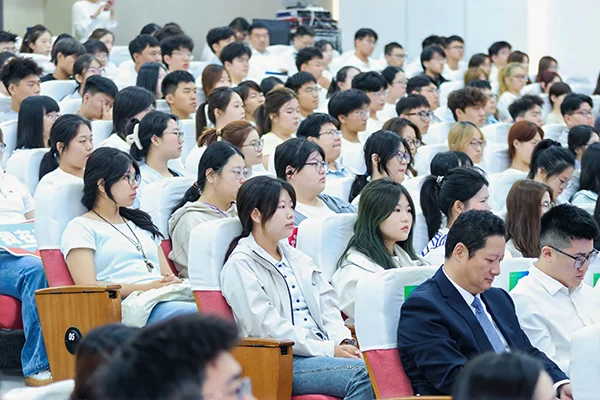
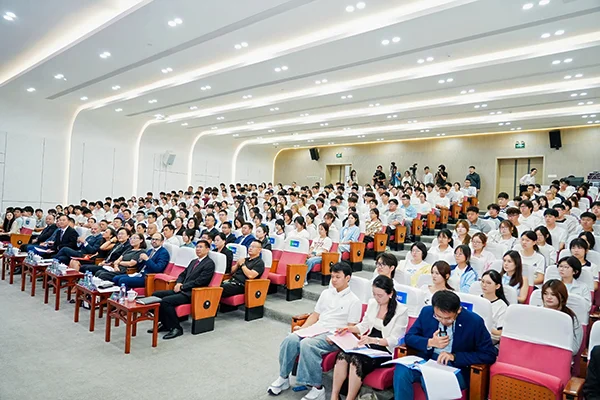
As such, the Institute is conceived as a space for training and exchange that will strengthen ties between the academic communities of Spain and China and create new opportunities for academic and scientific collaboration.
Intercultural Learning as a Meeting Point
During the event, María Luisa Ochoa highlighted the Institute as an example of educational cooperation and mutual learning between China and the West. The counselor for education at the Spanish Embassy in China emphasized the importance of encouraging young people to learn about other cultures, broaden their horizons, and develop competencies in international contexts.
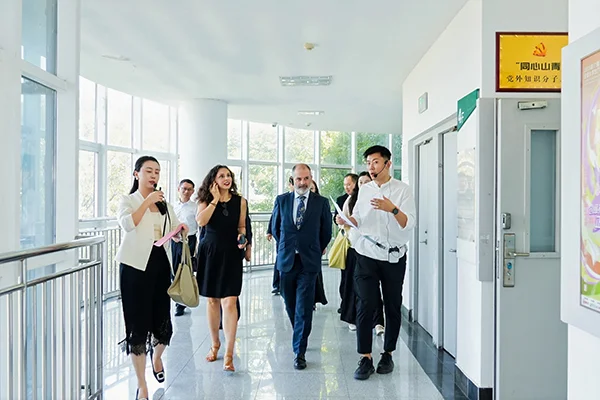
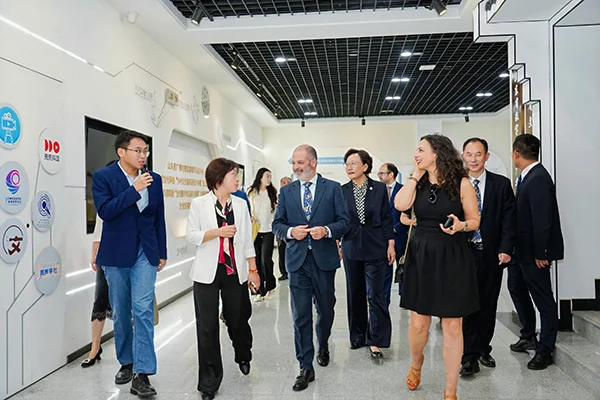
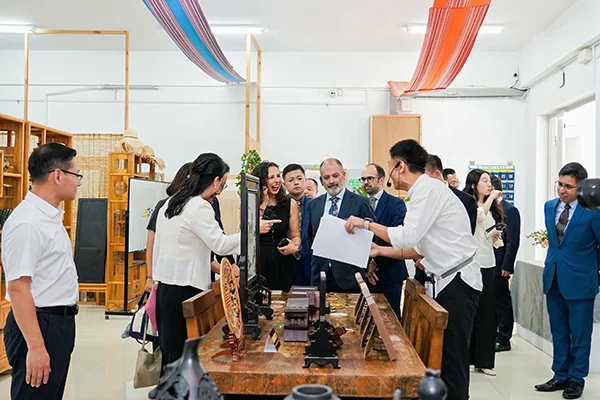
The UNEATLANTICO delegation also had the opportunity to tour different academic facilities at Shandong University of Political Science and Youth, including those related to dance, design and art, foreign languages, and cultural communication. The visit provided an opportunity to gain a deeper understanding of the institution’s academic projects and to explore new possibilities for cooperation.
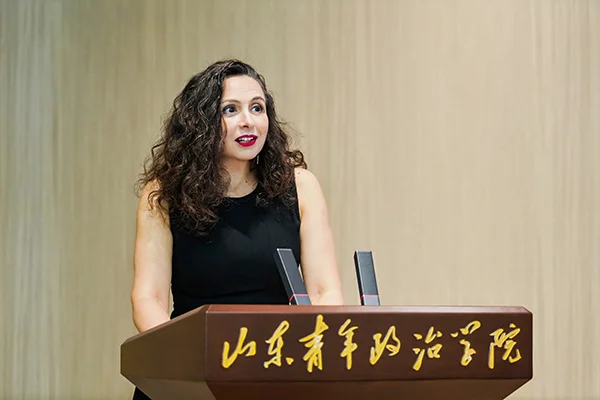
The scope of this partnership, therefore, extends beyond the activities of the new campus. The collaboration between the two universities provides a framework for sharing knowledge, experiences, and academic expertise, while also fostering greater understanding among the educational communities of both countries.
Cooperation Expanding Into New Areas
The inauguration of the Atlantic Institute of Digital Culture takes place against a backdrop of growing institutional and academic ties between FUNIBER, its university network, and various institutions in China. In November 2025, a FUNIBER delegation and representatives from its university network visited Shandong University of Political Science and Youth. During the meeting, where they discussed opportunities for academic cooperation with UNEATLANTICO and signed a memorandum of understanding aimed at promoting, among other initiatives, Spanish language instruction, dual degree programs, and university internationalization.
This process will continue this coming October with the holding of the 8th Ibero-American and Iberophony Forum, which will take place at UNEATLANTICO under the title “The Future of the Ibero-American Community and University Cooperation with the People’s Republic of China.” The new edition will continue the line of work established at the 7th Forum, held in November 2025 in Beijing, which consolidated a platform for inter-institutional collaboration aimed at strengthening academic, university, and cultural relations between China and the Ibero-American Community.
The 8th Forum is being organized jointly by FUNIBER, the China Chair Foundation, and UNEATLANTICO, in collaboration with the Shandong University of Political Science and Youth, the Academy of Diplomacy, the Ibero-American Communication Association (ASICOM), the Gustavo Bueno Foundation and the Royal European Academy of Doctors (RAED). It also receives institutional support from the Government of Spain, the Autonomous Community of Cantabria, and the City Council of Santander.
The inauguration of the Atlantic Institute of Digital Culture thus represents a new expression of university cooperation between China and Spain and expands the avenues through which academic institutions can promote the exchange of knowledge, education, and intercultural understanding. For UNEATLANTICO and FUNIBER, this initiative is part of a history of international collaboration that continues to create new points of connection between Europe, Asia, and Ibero-America.