
The Universidad Europea del Atlántico (European University of the Atlantic, UNEATLANTICO), an institution that is part of the International Academic Network of the Ibero-American University Foundation (FUNIBER), has unveiled its new Master’s Degree in Industrial Engineering. This graduate program is designed to train professionals capable of comprehensively addressing the design, management, and implementation of industrial projects and facilities.
The program is delivered in person and is regulated in Spain by Order CIN/311/2009, which qualifies graduates to practice as industrial engineers.
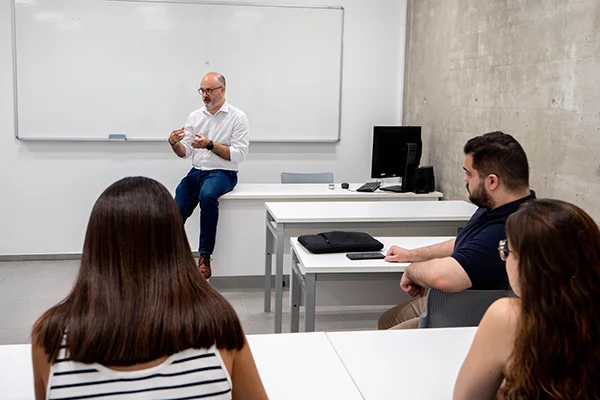
During the presentation to new students, the coordinator of the Master’s Degree in Industrial Engineering, Jorge Crespo, highlighted the program’s eminently practical nature and its focus on preparing students for entry into the job market. Crespo noted that one of the main objectives is for the program to provide students with “the foundation and skills necessary so that, when they enter the job market, they are truly competent in the industry,” placing special emphasis on internships and direct contact with the professional world.
In this regard, he stressed that “education makes more sense if the effort pays off” and explained that the program aims to ensure the knowledge acquired has real-world application and helps improve students’ career opportunities. He also highlighted the faculty’s involvement and their connections to the business sector, as well as the opportunity for students to build professional relationships with the companies where they complete their internships.
During the event, Crespo also presented other UNEATLANTICO initiatives related to internationalization, social action, and climate action, in addition to explaining organizational aspects of the master’s program, such as planning and schedules.
A Master’s Program Tailored to New Industrial Challenges
The presentation also detailed the structure of the master’s program, which consists of 120 ECTS credits spread over four semesters. The program prepares students to manage an industrial plant or facility throughout its various stages, from design to operation.
The program’s curriculum includes energy and electrical efficiency, construction, production organization, industrial climate control, and ICT networks. Other areas related to the sector’s evolution were also presented, such as process automation, robotics, flexible manufacturing, logistics, innovation, environmental management, and BIM projects.
Furthermore, the international dimension of the master’s program—which offers a dual degree—was highlighted. Students will be able to earn the Master’s Degree in Industrial Engineering from UNEATLANTICO and the Master’s Degree in Industrial Engineering from the Universidad Internacional Iberoamericana de México (International Ibero-American University of Mexico, UNINI Mexico), both institutions part of FUNIBER’s International University Network.
Practical Training and Industry Connections
Another aspect highlighted was the program’s connection to the professional world. The master’s program includes an International Workshop in Santander, designed as a forum to learn about success stories, update knowledge, and share experiences with professionals in the industrial sector.
The presentation also highlighted opportunities for practical training at companies and consulting firms related to industrial engineering during the final phase of the program. In addition, students will complete an applied Master’s Thesis.
In this regard, those interested in pursuing the Master’s Degree in Industrial Engineering can apply for a scholarship through FUNIBER via the following link. The Foundation supports applicants throughout the application process and provides academic guidance, while the universities in the Network are responsible for delivering the programs, conducting academic evaluations, and issuing the corresponding degrees.
The inclusion of this program in the academic offerings linked to FUNIBER’s International University Network also strengthens opportunities for access to specialized university education with an international dimension. In this way, collaboration among the institutions helps create new opportunities for professionals seeking to expand their skills and prepare for the technological, production, and management challenges posed by contemporary industry.