
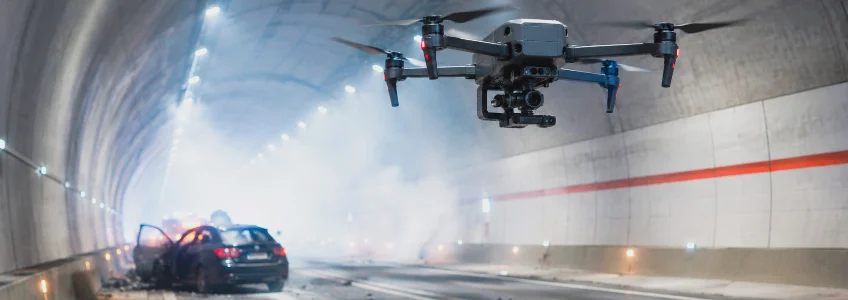
Dr. Roberto Marcelo Alvarez, executive director of the Fundación Universitaria Iberoamericana (FUNIBER) for Argentina and Uruguay, and Dr. Yini Airet Miró, a research professor at the Universidad Europea del Atlántico (Universidad Europea del Atlántico, UNEATLANTICO), an institution that is part of the Foundation’s International University Network, are participating in a new study alongside an international team of researchers. The research proposes an emergency response system based on autonomous drones and multi-agent reinforcement learning to expedite the search for victims in tunnel accidents.
The study is based on a widely recognized reality: tunnels are essential infrastructure for modern transportation, but they also represent one of the most challenging environments for rescue operations due to their enclosed nature, limited visibility, smoke buildup, structural damage, and the absence of positioning systems such as GPS. These conditions make it difficult to make quick and effective decisions during an emergency, which increases the risk for both those affected and the response teams.
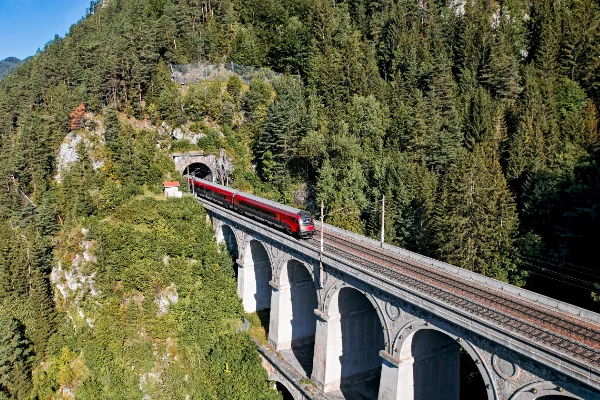
Artificial Intelligence to Improve Rescue Operations
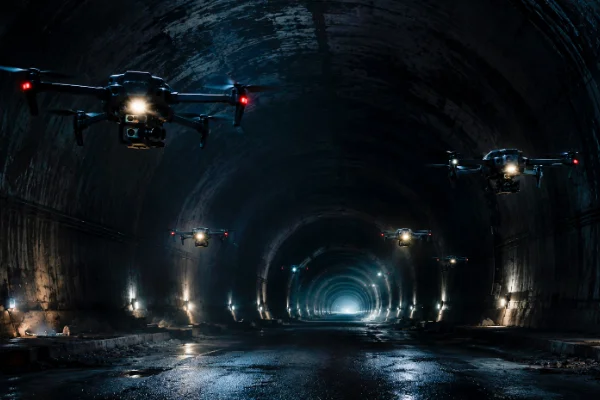
To address these challenges, the researchers designed a multi-agent reinforcement learning system that allows multiple autonomous vehicles to simultaneously explore a tunnel where an accident has occurred and coordinate their movements to efficiently locate victims.
Unlike other approaches that require constant communication between devices or high processing power, the proposed model allows each agent to make decisions independently based on information gathered from its immediate surroundings. This strategy reduces the computational load and facilitates its application in real-world situations, where communications may be disrupted by the accident itself.
The protocol also incorporates a search mechanism inspired by the cooperative behavior of gray wolves, which promotes a more efficient distribution of vehicles throughout the tunnel and prevents multiple teams from repeatedly inspecting the same areas. This increases coverage of the affected area and optimizes available resources during emergency operations.
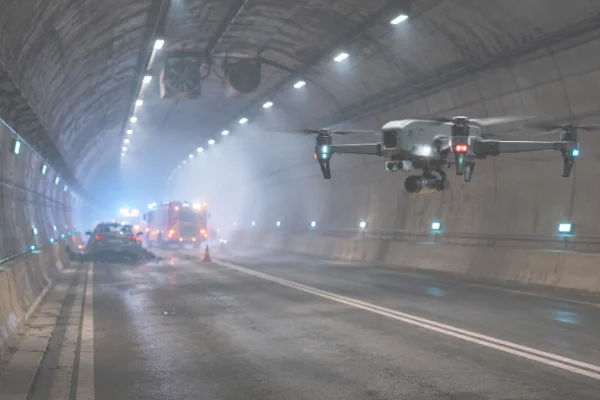
A Faster and Safer Response in Complex Scenarios
The researchers evaluated the system’s performance using various simulations that replicated tunnel accidents with different levels of complexity, including narrow passages, obstacles, partial collapses, and multiple victims scattered across different locations.
The results show that the proposed protocol reduces the time needed to locate trapped individuals, improves coverage of the environment, and decreases the number of unnecessary trips compared to other search methods used as benchmarks.
Furthermore, the system was able to minimize the risk of collisions between the various autonomous vehicles during search operations—a particularly important aspect in confined spaces where mobility is severely limited and any interference can delay rescue efforts.
Another highlight of the study is the algorithm’s ability to adapt to dynamic environments. As accident conditions change—such as the appearance of new obstacles or the blocking of certain routes—the agents modify their search strategy to continue advancing toward areas not yet inspected and maintain the mission’s effectiveness.
Applications for Intelligent Emergency Management
The authors believe this work represents a significant advance in the development of intelligent disaster response systems, particularly in underground infrastructure where response time is critical to saving lives.
Although the research has been validated through simulations, the developed framework provides a solid foundation for future applications in real-world scenarios. Future lines of research include the incorporation of three-dimensional tunnel models, sensors with more realistic operating conditions, and experimental tests with robotic platforms capable of operating in emergency environments.
This type of research highlights the growing potential of artificial intelligence and autonomous systems to strengthen risk management and improve response capabilities in critical situations, contributing to the development of safer and more resilient infrastructure.
If you’d like to learn more about this study, click here.
To read more research, check out the UNEATLANTICO repository.
FUNIBER promotes education and research in areas related to engineering, digital transformation, and artificial intelligence by awarding scholarships to study graduate programs offered by the universities in its International University Network. It also supports research and innovation projects aimed at developing technological solutions capable of addressing current challenges in areas such as security, smart mobility, and emergency management, in line with its commitment to advancing scientific knowledge and its application for the well-being of society.