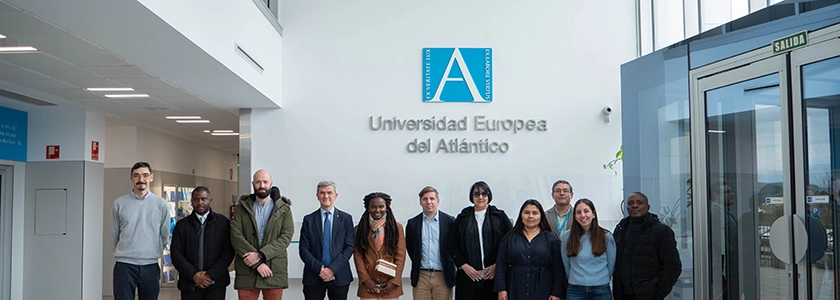
The Universidad Europea del Atlántico (European University of the Atlantic, UNEATLANTICO) held, between January 19th and 23rd, the kick-off meeting of the European project Erasmus+ Capacity Building in Higher Education (CBHE) “Simulation-based training and digital technologies combined with a service-learning approach for experiential and reflective learning in nutrition and dietetic education” (MAHINE) funded by the European Union through the European Education and Culture Executive Agency (EACEA) and aimed at strengthening training, innovation, and international cooperation in the fields of nutrition, agronomy, and health. A project in which the Iberoamerican University Foundation (FUNIBER) also participates.
Alongside UNEATLANTICO, the project leader, the main partners of the project participated in the meeting: the Universidade Internacional do Cuanza (International University of Cuanza, UNIC) and Universidade José Eduardo dos Santos (UJES) in Angola, and Università Politecnica delle Marche (UNIVPM) in Italy.
Distinguished professors and researchers from each institution also attended the meeting: Thomas André Prola, Iñaki Elío Pascual, Sandra Sumalla, and Kilian Tutusaus from UNEATLANTICO; Maurizio Battino and Luca Mazzoni from UNIVPM; Marino Leopoldo Sungo and Herculano João from UJES; and María Elena Castro and Virginia Kambani Sumbo from UNIC.
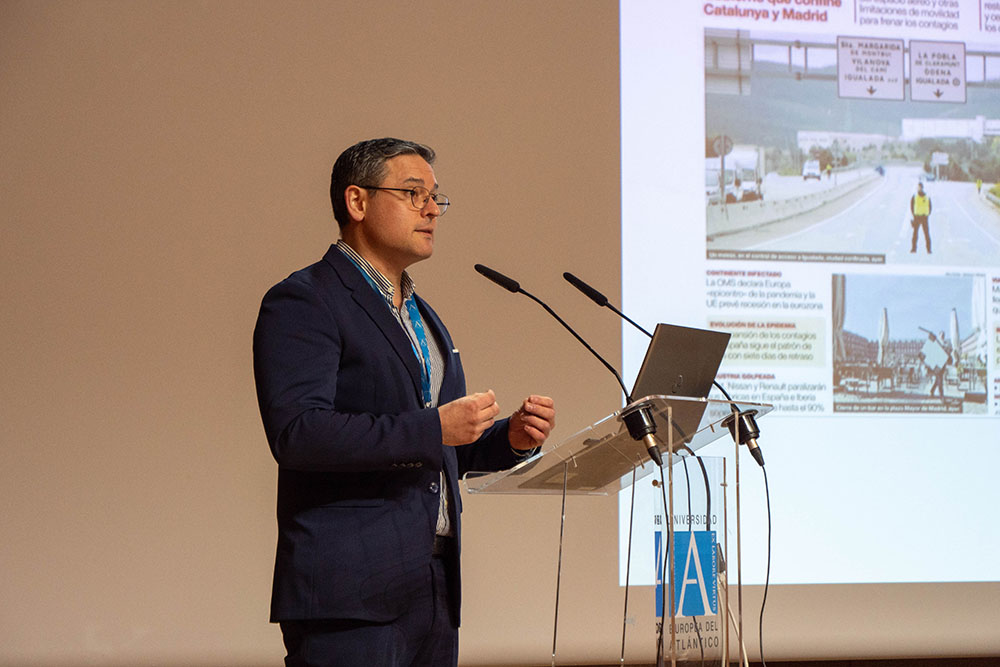
The meeting was inaugurated by Josep Alemany, Vice-Rector for Academic Planning and Faculty, and Juan Luis Martín Ayala, Vice-Rector for Research and Knowledge Transfer, who welcomed the participants and highlighted the importance of international academic cooperation to address complex social and health challenges.
During the sessions, the serious nutritional situation in Angola, marked by food insecurity and lack of formal training in this area, was highlighted. According to the presentation, there are currently no public institutions that offer complete university studies in nutrition, which limits the professional recognition of nutritionists and their insertion in the job market, especially in hospitals, where these functions often fall to nursing personnel.
Participants pointed out that the main difficulties in implementing the project are the lack of connection between nutrition and agronomy, curricula poorly adapted to the country’s social reality, lack of practical training, and a strong cultural rootedness that hinders the adoption of new eating habits. This is compounded by inefficient food distribution and the absence of balanced combined diets.
The idea of sensitizing policymakers and government leaders to the importance of the role nutritionists was of particular relevance. “There are no public policies on nutrition in Angola, and that is a structural problem,” stressed Virginia Sumbo, a UNIC professor, who also insisted on the need to educate and raise awareness among both the population and institutions.
As a solution to these needs, MAHINE will develop tools to improve the practical training of nutritionists in Angolan higher education institutions. With the help of chatbots, students will be able to improve their conversational skills with repeated practice of interactions with virtual patients, contextualized in Angola’s nutritional reality. The project also includes the promotion of services to the community from participating universities, with the aim of improving public health in Angola.
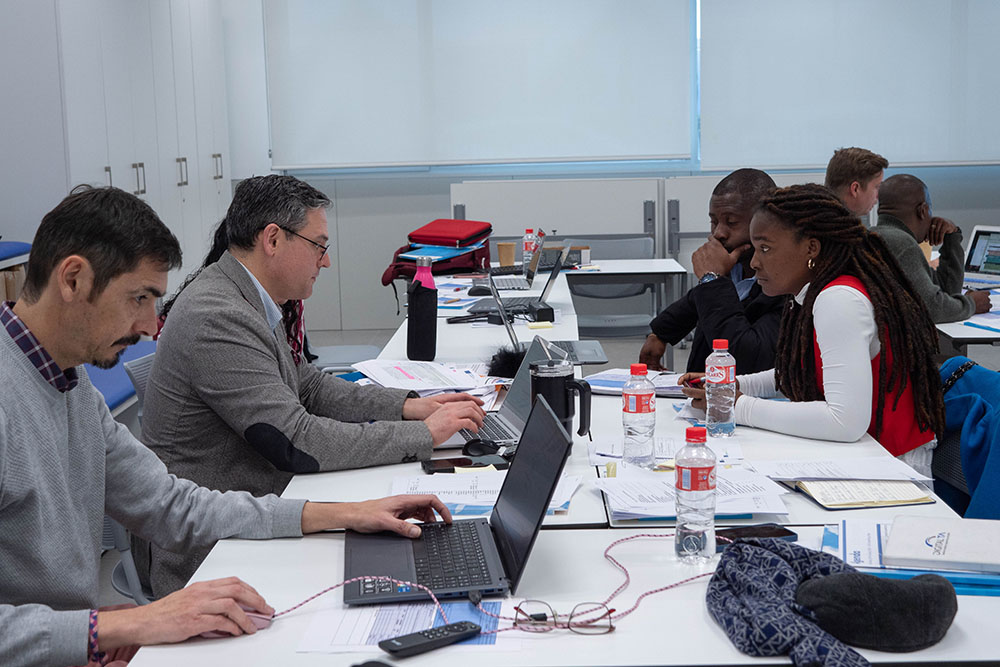
Throughout the week, the project partners presented the institutions participating in the project and organized the different tasks to be developed over the next three years, which are related to the technological development of the project, its quality, financial aspects, and communication actions.
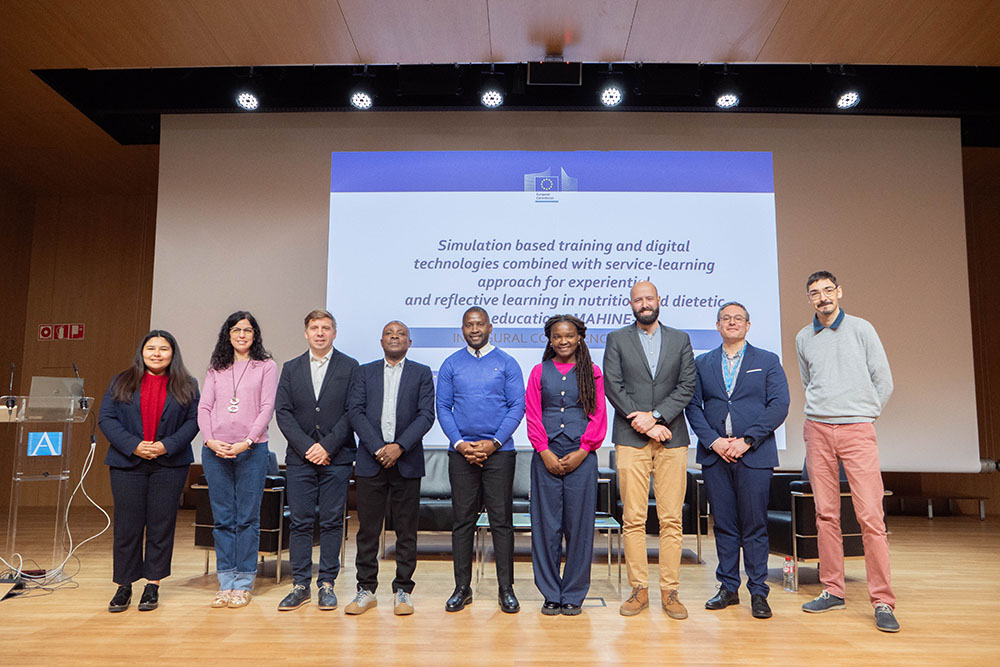
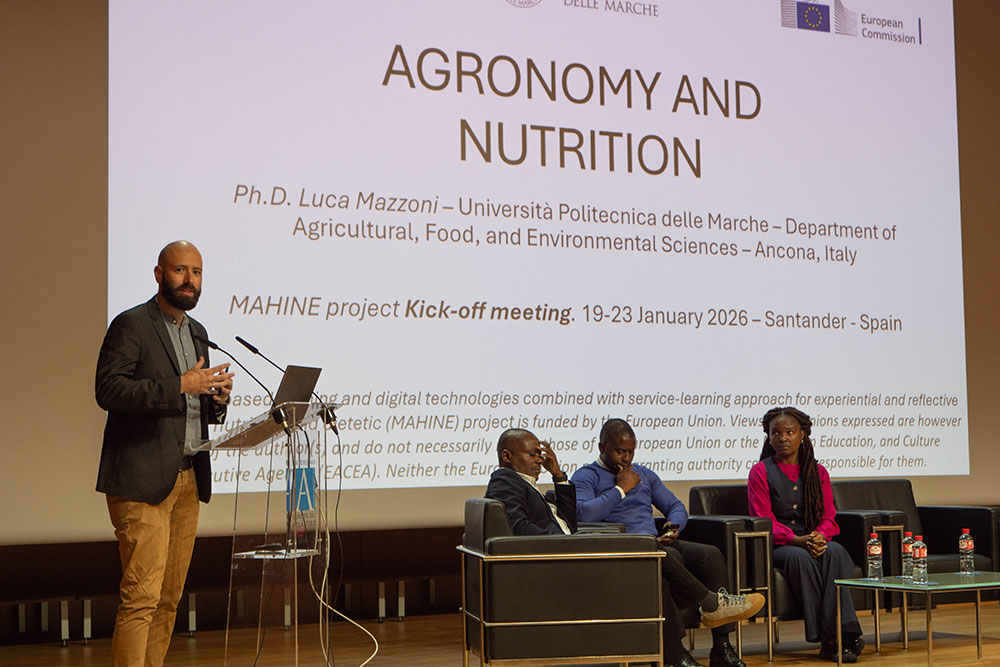
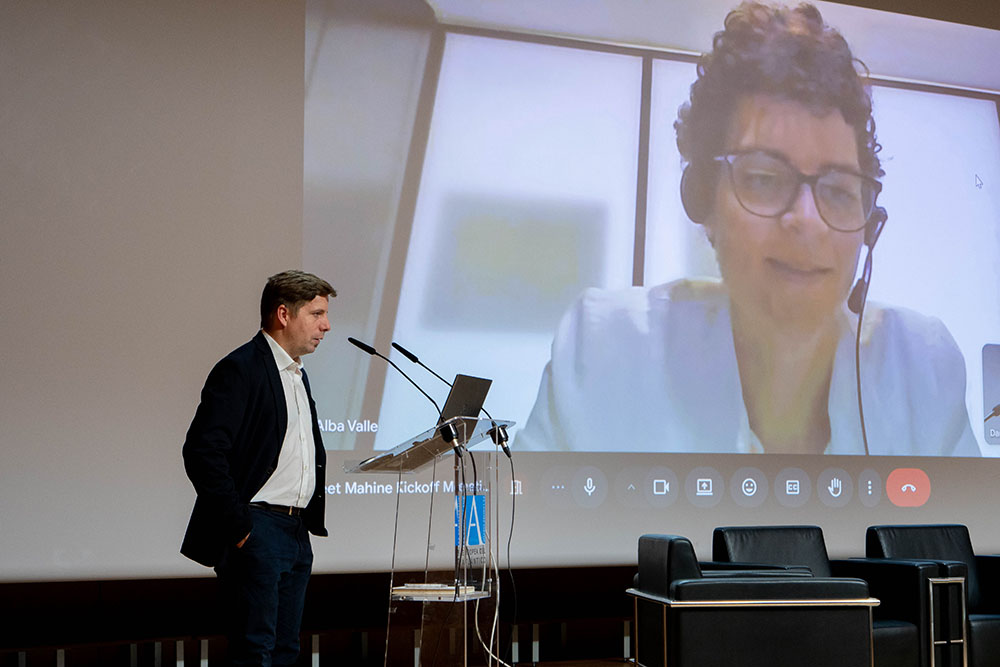
On Thursday, January 22nd, as a culmination of the meeting, a conference to present the project to the academic community was held in the university’s auditorium. The event was also held online through the university’s YouTube channel, with the attendance of students and faculty from Angola. The session is available here. Alba Valle, Project Manager of the European Union Delegation in Angola, opened the conference. “As project manager in the area of education, it is worrying to see the negative consequences that malnutrition in the first years of life can have on children’s learning abilities,” she stressed.
The manager congratulated UNEATLANTICO “for creating a relevant project that includes innovative elements to improve training in the area of nutrition with an impact on agriculture, a field in which Angola has great potential.”
MAHINE has the support of other institutions associated with the project: The Iberoamerican University Foundation (FUNIBER), the NGO Nutrición sin Fronteras (NSF), and the Colegio Profesional de Dietistas-Nutricionistas de Cantabria (CODUNICAN) in Spain; the Universidade do Oporto (UPORTO) and the Universidade de Trás-os-Montes e Alto Douro (UTAD) in Portugal; AP Hogeschool Antwerpen in Belgium; and UKAMBA in Angola.

“Funded by the European Union. Views and opinions expressed are however those of the author(s) and do not necessarily reflect those of the European Union or the European Education and Culture Executive Agency (EACEA). Neither the European Union nor the granting authority can be held responsible for them.”